Everything You Need to Know About Pistachio Trading!
Pistachios
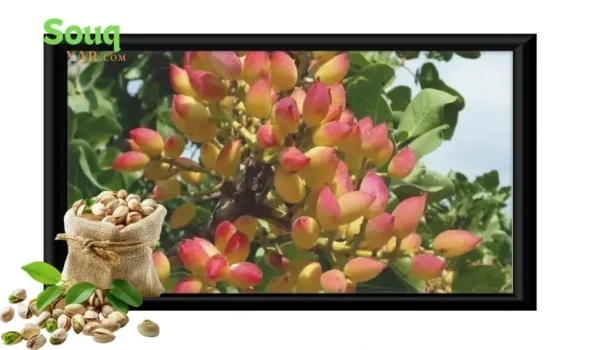
Pistachios, commonly known as “Aleppo Pistachios,” are among the oldest and most renowned nuts worldwide, celebrated for their rich flavor, diverse uses, and numerous health benefits. With a history spanning thousands of years, pistachios were traditionally cultivated in the Middle East and Central Asia, where Iran emerged as one of the largest producers and exporters, preserving the nut’s pure taste.
Rich in proteins, fibers, and healthy fats, pistachios are ideal for balanced diets. Beyond culinary applications, they are utilized in pharmaceuticals and cosmetics, such as creams.
At Souqyar Export Group, we aim to provide traders who want to start a pistachio business with comprehensive knowledge about pistachios, addressing every aspect of the trade. For import consultations, rely on our expertise, professionalism, and commitment to transparency.
The History and Origin of Pistachios
Pistachios originated in the Middle East and Central Asia from the Pistachio vera tree. Cultivated for over 3,000 years, they began in Iran’s mountainous regions, spreading to Syria and Afghanistan. During the medieval period, Persian and Arab traders introduced pistachios to the Mediterranean, including Turkey, Greece, and Italy.
In the 19th century, pistachios reached the U.S., and California is now a major producer outside the Middle East. Over time, new varieties with thinner shells, larger nuts, and faster maturity have been developed, enhancing pistachios’ global appeal.
Over time, new pistachio varieties have been developed with unique features, such as thinner shells, larger kernels, and faster maturation times. Genetic diversity has enabled the cultivation of pistachios better suited to different climates. The typical pistachio has an oval shape with a pinkish, soft outer hull removed during harvesting. Its hard shell naturally splits when ripe. Unsplit nuts are stored for later cracking, offering extended shelf life. The kernel has a thin pink skin and a green core, known for its sweet, nutty flavor and slightly buttery texture.
Health Benefits and Uses of Pistachios
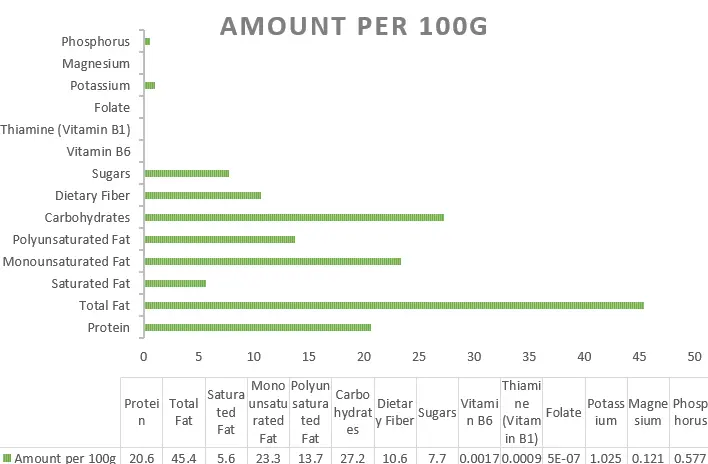
Pistachios are nutrient-dense, rich in proteins, fiber, healthy fats, vitamins (like B6), and minerals (such as potassium). These nutrients promote heart health, support the immune system, and help regulate blood sugar levels. Pistachios are versatile in cooking, enhancing dishes like baklava, knafeh, salads, ice cream, butter, chocolate, and protein bars. Additionally, pistachio oil is used in skincare products for its moisturizing properties. As a raw ingredient, oil, or extract, pistachios are vital for global trade, especially from producers like Iran and the U.S.
Nutritional chart based on USDA data can provide more details:
Symptoms of Consuming Pistachios
While pistachios are highly beneficial, excessive consumption can cause symptoms in individuals with nut allergies. These include skin rashes, itching, difficulty breathing, swelling of the lips or tongue, vomiting, or diarrhea. Overeating pistachios can also lead to potassium overload or weight gain due to their calorie density. Rarely, contaminated products may contain aflatoxins, which are harmful toxins. To avoid risks and maximize benefits, it’s crucial to source pistachios from reputable and trusted suppliers.
Annual Pistachio Production and Country Shares
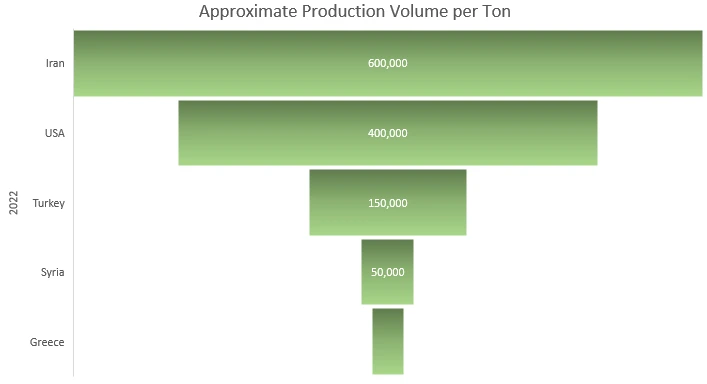
Global pistachio production ranges between 1.5 to 2 million tons annually, depending on climatic conditions and farming techniques. The top producers are Iran and the United States, each contributing the largest share of production—ranging between 1 to 1.5 million tons combined annually. Other significant producers include Turkey and Syria. These two major players dominate the global pistachio trade, highlighting their critical role in the market. For further insights, explore articles on pistachio trade, import, and export trends
Types and Characteristics of Pistachios
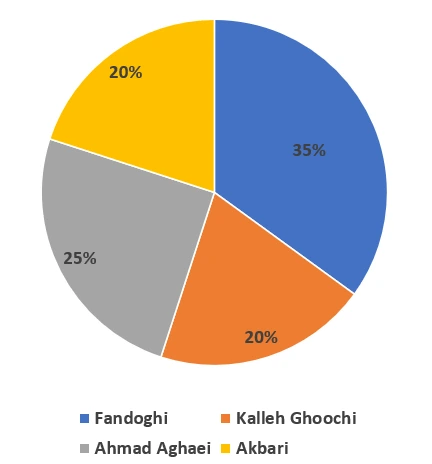
Iran, as a leading producer of pistachios globally, cultivates several varieties with unique qualities. The main types are:
- (Round Jumbo Pistachio): Known as “ Kalleh Ghochi or Qouchi,” this large-sized pistachio is ideal for export, with higher prices for premium sizes.
- Ahmad Aghaei: Preferred for its vibrant kernel color and high quality, popular for local and export markets.
- Akbari: Recognized for its long, elegant shape, considered a premium type for global markets.
- Fandoghi or Fandoqi (Round Pistachio): Smaller and rounder, it’s widely used in the food industry due to affordability and versatility, commonly exported as kernels or slivers.
Pistachio Size and How to Measure Ounce Size
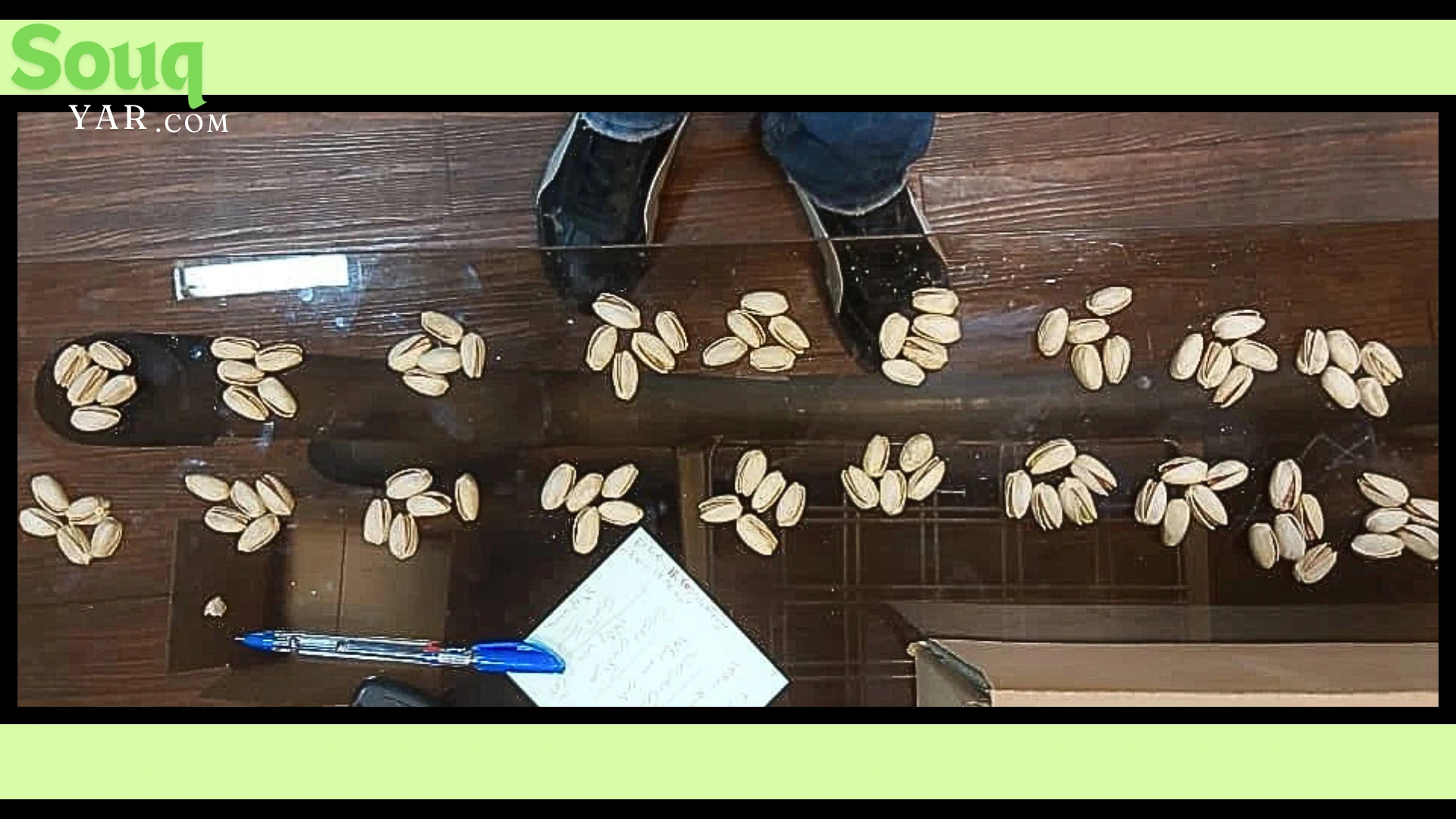
The size of pistachios is often expressed in “ounces,” indicating the number of pistachios per 142 grams (approx. 5 ounces). To measure:
- Weigh: Use a digital scale to measure 142 grams of pistachios.
- Group: Divide into groups of five pistachios each.
- Count: The number of groups equals the pistachio’s ounce size. For example, 26 groups mean the pistachios are “26-ounce” size.
For closed-shell pistachios, quality is assessed by cracking them to calculate the kernel-to-shell weight ratio, aiming for 50% or more for premium quality.
Pistachio Classification by Size
Pistachios are classified based on the number of nuts per ounce, with the following categories:
- Very Large: 18-20 per ounce (e.g., Qouchi or Akbari).
- Large: 20-22 per ounce.
- Medium: 22-26 per ounce.
- Small: 26-28 per ounce.
- Very Small: 28-34 per ounce (common size for Fandoqi pistachios).
This classification helps determine the quality and marketability of different pistachio varieties.
Types of Pistachio Kernels
- Green Pistachio Kernel (known as Bouza in Arab countries): The most expensive, harvested at the beginning of the season. It’s known for its rich green color and is used in making ice cream, sweets like baklava, and skincare creams. This type is commonly exported from Iran.
- Natural Pistachio Kernel: This is the most common type in the market, with varying qualities based on the amount of broken pieces and color.
- Ground Pistachio Kernel: Resulting from grinding, this is often used in cooking and has a finer texture than the other types. It’s mostly unpeeled after breaking.
- Pistachio Paste: Produced by grinding the kernel into a fine paste, usually unpeeled, and often processed locally by importers to reduce customs duties.
What types should we be cautious about purchasing in pistachio trade markets with shells?
Mechanically-opened (water-cracked pistachios)
In the pistachio trade, especially for large quantities, it’s important to avoid purchasing processed and artificially cracked pistachios, known as Mechanically-opened (water-cracked pistachios). These types of pistachios may be treated with water to open the shell, which can affect their quality and durability. It’s essential to ensure the pistachios come from reputable sources to maintain the integrity of the product.
The ” Mechanically-opened ” (water-cracked pistachios) are pistachios whose shells are artificially opened using steam when natural cracking doesn’t occur. Although it’s difficult to distinguish these from naturally cracked ones due to improved cracking methods, certain features like spots, pale color, and jagged edges can help differentiate them. This type is often contaminated with aflatoxins, which can only be detected through lab testing. For safe trade, it’s advised to avoid these pistachios, especially for export to Europe, and rely on trusted sources with expertise.